Does Homeschooling Hurt Socialization? What Actually Helps
Homeschooled kids aren’t doomed to be isolated, but socialization doesn’t build itself either.


Section 01The Short Answer
Does homeschooling hurt socialization? The research consensus says no, but that’s not the same as saying it happens on its own. Study after study comparing homeschooled kids to classroom peers lands in roughly the same place: no consistent gap in social skills or self-esteem. Homeschoolers who get out of the house regularly test as socially capable as anyone else.
That finding comes with a footnote most homeschool blogs skip. The kids in those studies weren’t sitting alone at a kitchen table five days a week. They were in co-ops, sports leagues, and community groups regularly. Socialization wasn’t missing from their lives. It just didn’t look like a school hallway.
- The “no socialization” claim isn’t well-supported once you check what the studies actually measured
- Co-ops, sports and community groups are the obvious, proven answer
- The underrated piece: weekly 1-on-1 conversation with an adult who isn’t a parent
- It’s one real piece of the puzzle, not a replacement for the others
Homeschool advocacy sites are right that the isolated, awkward stereotype is mostly myth. Where that reassurance falls short: none of the co-op, the team, or the community class is legally required, and plenty of families quietly skip all three.
Section 02The Real Socialization Gap
So where’s the actual risk? It isn’t a diagnosis. It’s a default setting. A parent who works from home, sticks close to one or two families, and skips outside activities during a busy month can drift from flexible schedule to accidentally isolated without ever deciding to. Nobody flags it. There’s no attendance sheet, no teacher pulling anyone aside at pickup.
| The worry | The honest version |
|---|---|
| Homeschooled kids end up isolated and socially awkward. | Study after study comparing homeschooled kids to classroom peers lands in roughly the same place: no consistent gap in social skills or self-esteem. |
| The research settles it, so socialization takes care of itself. | Not the same thing. The kids in those studies weren’t sitting alone at a kitchen table five days a week. They were in co-ops, sports leagues, and community groups regularly. |
| Homeschooling itself damages a child socially. | Homeschooling doesn’t cause isolation by itself. It removes the built-in social structure a school day provides automatically, and somebody has to rebuild that structure on purpose. |
| Homeschoolers get less practice talking to a range of people than a same-grade classroom gives. | Homeschool social circles tend to span a wider age range than a same-grade classroom does, and homeschoolers often get more practice talking across an age gap, not less. |
| Co-ops and sports teams are all it takes. | Consider them the floor, not a bonus round. The part missing from most lists is regular one-on-one conversation with an adult teacher who isn’t a parent. |
The kids most likely to struggle aren’t in a co-op with fifteen other families. They’re the ones whose entire social world runs through siblings, a few cousins, and whatever adults live in the house. Remove the deliberate effort and that world shrinks fast, often before anyone notices.
That’s the honest version of the homeschool socialization question. Homeschooling doesn’t cause isolation by itself. It removes the built-in social structure a school day provides automatically, and somebody has to rebuild that structure on purpose.
Section 03The Obvious Answers: Co-ops, Sports, Community
Most articles on this topic stop here, and they’re not wrong to. Co-ops, sports teams, music classes, and community events are the backbone of homeschool social life. They work, and skipping them isn’t a shortcut worth taking.
A weekly co-op puts a kid in a room with other children who don’t automatically do what he or she wants: sharing space, waiting a turn, no exceptions. A rec-league soccer team adds a coach who isn’t a parent and a scoreboard that doesn’t care about feelings. Church groups, 4-H, scouting, and library programs each add one more room of people a kid didn’t choose.
One detail rarely gets credit. Homeschool social circles tend to span a wider age range than a same-grade classroom does. A homeschooled ten-year-old at co-op might talk to an eight-year-old and a thirteen-year-old in the same afternoon. Talking across an age gap is its own skill, and homeschoolers often get more practice at it, not less.
None of this is optional if socialization matters to a family. Consider it the floor, not a bonus round.
Section 04The Piece Almost Nobody Mentions
Here’s the part missing from most lists. Regular one-on-one conversation with an adult teacher who isn’t a parent is a form of social practice too, and it’s one homeschooled kids often get less of than classroom kids, who get called on, corrected, and expected to answer out loud several times a day.
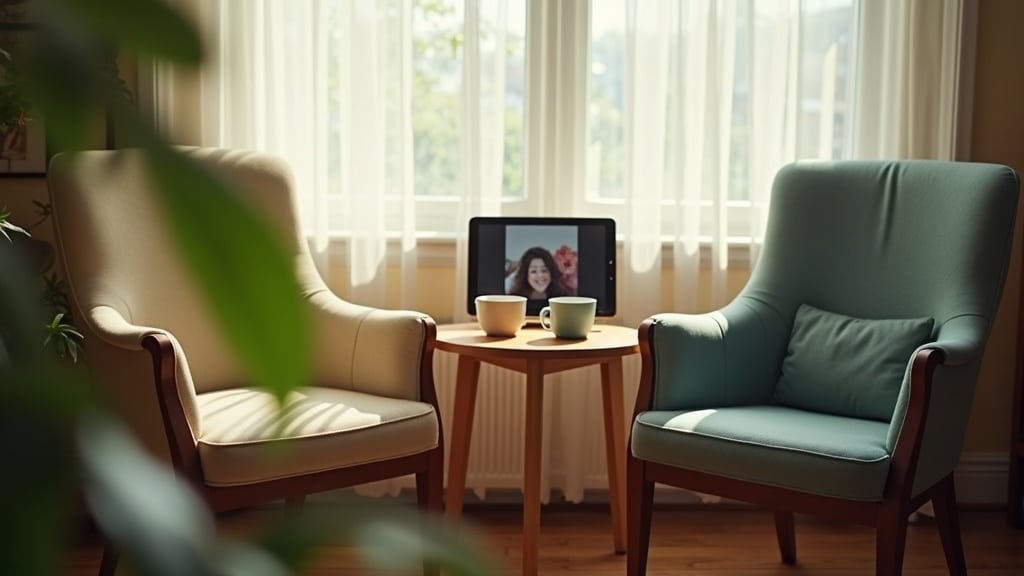
A weekly lesson with a language tutor doesn’t replace a soccer team. It does something a soccer team doesn’t: it puts a kid in a low-stakes, one-on-one exchange with an adult they actually have to talk to, not just sit near. They answer a direct question. They get corrected mid-sentence and keep going instead of shutting down. That’s a specific social muscle, separate from “plays well in a group.”
This isn’t a claim that a French or Spanish lesson fixes homeschool socialization. It does nothing for the group-dynamics side: sharing space, reading a room full of kids, negotiating a game’s rules on the fly. It’s one piece, a real one, sitting next to the co-op and the sports team rather than replacing either.
Section 05What 1-on-1 Talk Actually Builds
Break down what actually happens in a weekly one-on-one lesson and the overlap with social skill gets specific fast.
A kid learns to hold a conversation with an adult who isn’t family: no shared house rules, no inside jokes, just two people working out what the other means. They learn to be wrong out loud and keep talking anyway, which is harder than it sounds. They also get steady practice performing under mild pressure, answering when called on instead of waiting for someone else to talk first.
None of that requires a group. It requires one consistent adult who shows up every week, asks real questions, and expects a real answer back. A certified teacher running a one-on-one session is doing exactly that, in French, Spanish, or English, whether or not anyone in the family calls it socialization practice.
The kids who benefit most are often the quiet ones, the ones who freeze in a group but talk just fine once the group pressure disappears. A weekly lesson gives that kid a standing appointment to practice talking to an adult, every week, whether or not this month’s co-op schedule fell apart.
Section 06Building a Real Social Plan
A real plan for homeschool socialization has two layers, and most advice only covers one of them.
Layer one is group contact, shown above: co-ops, teams, and community groups, plus at least one regular unstructured hangout the family actually enjoys enough to keep doing. Skip this layer and no amount of one-on-one tutoring makes up the difference.
Layer two is one-on-one adult practice: a standing weekly lesson in a subject that requires the kid to talk back instead of just listen. Language lessons work well here because talking is the entire point of the session. There’s no hiding behind a worksheet.
Families who build both layers rarely spend much time worrying about socialization. The group side handles peer dynamics. The one-on-one side handles something a peer group teaches less well: talking to an adult and staying in a conversation after a mistake, instead of being one voice in a group of ten.
Section 07The Bottom Line
On its own, no. Left completely unmanaged, it can drift that way. The risk only becomes real when nobody treats socialization as an ongoing job. The difference isn’t the schooling model. It’s whether somebody built a real social routine on purpose, the way a school building does automatically just by requiring attendance.
Co-ops and sports teams cover the group side of that routine. A weekly conversation with a teacher who isn’t a parent covers a piece nothing else quite reaches: talking to an adult, one-on-one, every week, and getting measurably better at it.
Socialization isn’t one skill a kid either has or doesn’t. It’s a set of separate muscles, and talking to an adult one-on-one is one of them.
Inspire has been doing exactly this since 2012 — more than 20,000 students taught across Canada and the US.
Section 08FAQ
Give Your Child a Weekly Conversation Partner
One of Inspire’s certified teachers assesses comprehension, vocabulary and speaking in a focused 30-minute session, then sends you a written level report within 48 hours.
Have a question first? Contact us →
 Homeschool
How Many Hours a Day Should You Homeschool? (By Grade, 2026)
How many hours a day should you homeschool? Most families, per data from the National Home Education Research Institute , finish core academics in 1 to…
 Homeschool
How Much Does Homeschooling Cost Per Year? (2026 Range)
How much does homeschooling cost per year? Most families spend between $700 and $1,800 per child. Here’s a realistic 2026 breakdown of what drives the…
✓ Verified against homeschool research consensus, July 2026