My Child Understands French but Won’t Speak: Why This Is Normal
If your child understands French but won’t speak, that’s normal. It’s often the natural “Silent Period” language learners go through.

Section 01The Short Answer
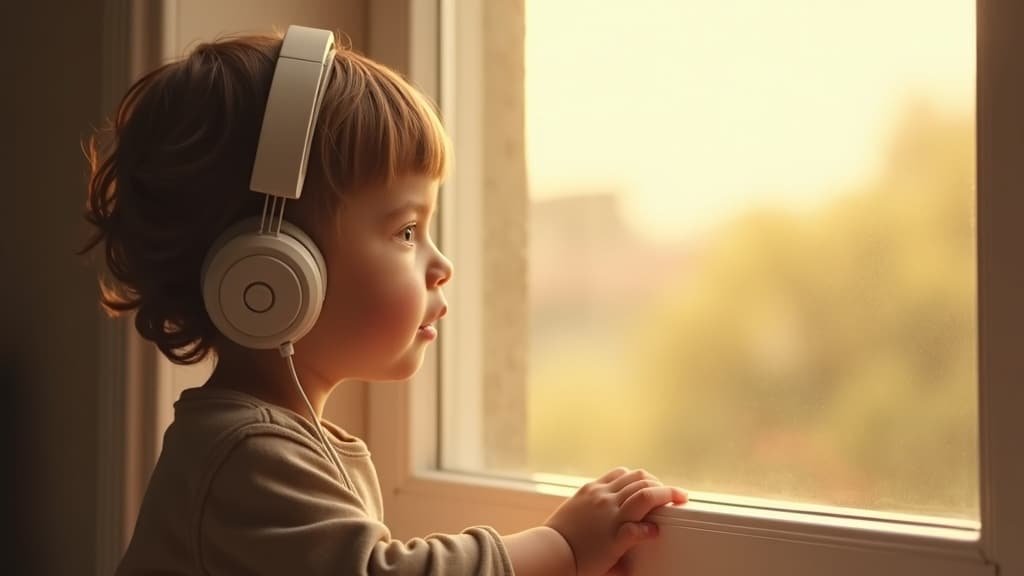
When a child understands French but won’t speak, this is completely normal and often part of the natural “Silent Period” in language development. Many children build strong listening and comprehension skills before they feel ready to speak. This does not mean they are behind or struggling.
It is one of the most common concerns I hear from parents: “I know they understand you, so why won’t they talk back?” If you are watching your child nod along to my French but answer only in English (or not at all), I have a very important message for you: This is a normal, healthy, and necessary part of learning. If you are trying to understand what this means for their overall level, here is a parent-friendly guide to how to assess French level for a homeschool child.
Section 02What’s the Language Gap Between Understanding and Speaking?
To understand why this happens, we have to look at how the brain prioritizes information.
- Receptive Language (Listening and Reading): This is the ability to take in and understand information. It always develops first. Your child is currently building a massive “internal library” of French vocabulary and grammar.
- Expressive Language (Speaking and Writing): This is the ability to produce information. It is much harder! It requires the brain to find a word in that library and then physically coordinate the mouth to say it correctly.
| Language Skill | What It Is | How It Develops |
|---|---|---|
| Receptive Language (Listening & Reading) | The ability to take in and understand information | Develops first, as your child builds an “internal library” of French vocabulary and grammar |
| Expressive Language (Speaking & Writing) | The ability to produce information | Develops later and takes more effort, as the brain must find the word and coordinate the mouth to say it correctly |
In language learning, the “understanding” library is always much larger than the “speaking” shelf. A child understands French but won’t speak at the same pace they understand it, since the two skills grow separately. There are actually clear signs of progress you can spot at home, even before they begin speaking confidently.
Section 03How Long Does the Silent Period Really Last?
In linguistics, we call this the Silent Period. During this stage, your child is not being passive. They are internalizing the rhythm of the language and building the confidence needed to take a creative risk. A child understands French but won’t speak for weeks or months during this stage, and that gap is expected, not a warning sign.
I have seen many students spend months “loading” information before suddenly blossoming into full sentences. If we push too hard during this phase, it can actually create anxiety that slows down progress. What you feed into that quiet stretch matters too, which is why most beginner French shows run far too fast for a true beginner.
Section 04How Can You Encourage Speaking Without Pressure?
At Inspire, we do not measure success only by what a child says. We look at the “Pillars of Language” as a whole, since a child understands French but won’t speak on command in a single lesson. If a student is in a quiet phase, we use:
- Digital Tools: Letting them “circle” or “draw” the answer on the screen.
- Low Pressure Games: Focusing on fun so the words “leak out” naturally.
- Validation: Making sure they feel successful just for understanding.
By lowering the pressure, we allow the speaking pillar to grow at its own pace. Even when a child understands French but won’t speak yet, that pace still counts as progress. If you want something concrete to follow during lessons, you can use a simple French assessment checklist.

It’s a pattern Inspire’s teachers have watched play out for more than a decade, across over 20,000 students taught one-on-one since 2012.
Understand where your child’s French really stands
One of Inspire’s certified teachers assesses comprehension, vocabulary and speaking in a focused 30-minute session, then sends you a written level report within 48 hours.
Have a question first? Contact us →
 Guide
GuideHow to Assess French Level for a Homeschool Child
Here is how to assess French level for a homeschool child: you do not need formal tests or to speak French yourself. By watching what your child can…
 Guide
GuideFrench CEFR Levels for Kids (A1 to B1) Explained for Homeschool Parents
French CEFR levels for kids explain what A1, A2 and B1 actually look like during a lesson — so you can place your child and track real progress without…
 French
How Long Does It Take a Child to Become Bilingual?
An app ad promises fluent in three months. A worried comparison to a bilingual-from-birth cousin suggests it might never happen at all. Neither is the…